Complete Fertilizer Guide
For Vegetables and Crops
How to use nitrogen fertilizer
Main Types of Fertilizers
6 important fertilizers commonly used by farmers in Bangladesh
Nitrogen Fertilizer (Urea)
Makes leaves green and promotes rapid growth.
Best for: Spinach, rice, wheat, lettuce
Phosphorus Fertilizer (TSP / SSP)
Strengthens roots and increases flowers and fruits.
Best for: Tomato, potato, eggplant
Potassium Fertilizer (MOP)
Improves disease resistance and fruit quality.
Best for: Banana, chili, mango, gourd
DAP (Diammonium Phosphate)
Nitrogen + Phosphorus together. Good for seedlings.
Best for: Vegetable seedlings, rice, corn
TSP (Triple Super Phosphate)
High phosphorus. Effective for root and yield growth.
Best for: Potato, tomato, eggplant, cauliflower
MOP (Muriate of Potash)
Main source of potassium. Improves quality.
Best for: Gourd, okra, chili, banana
Best Fertilizer Guide for Vegetables
Which fertilizer works best for popular vegetables
Tomato / Eggplant
TSP + MOP + small amount of Urea. Increase potassium during fruiting.
Spinach / Lettuce
Urea or nitrogen-rich fertilizer. Best for leafy growth.
Potato
TSP + MOP + DAP. Phosphorus is essential for root and tuber growth.
Gourd / Okra / Beans
MOP + TSP. Potassium is very important for high yield.
Cabbage / Cauliflower
Balanced NPK. Nitrogen for leaves, phosphorus for head formation.
Chili / Coriander
MOP + small amount of TSP. Potassium improves fruit quality.
How to Make Compost Fertilizer
Complete process of making natural fertilizer using simple household materials
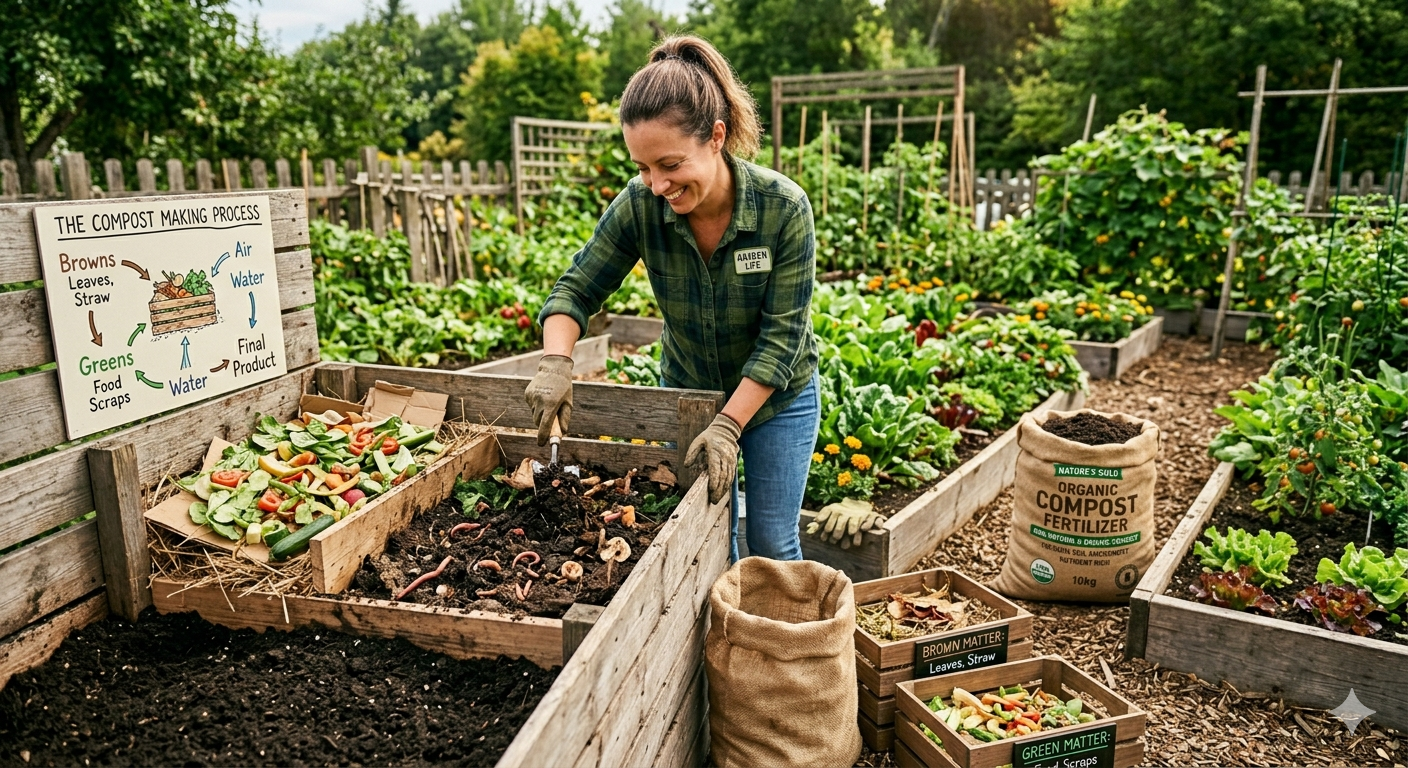
কি কি লাগবে
- • Vegetable peels
- • Dry leaves
- • Cow dung
- • Kitchen waste
উপকারিতা
- ✓ Improves soil fertility
- ✓ Increases water retention
- ✓ Completely natural and safe
- ✓ Reduces need for chemical fertilizers
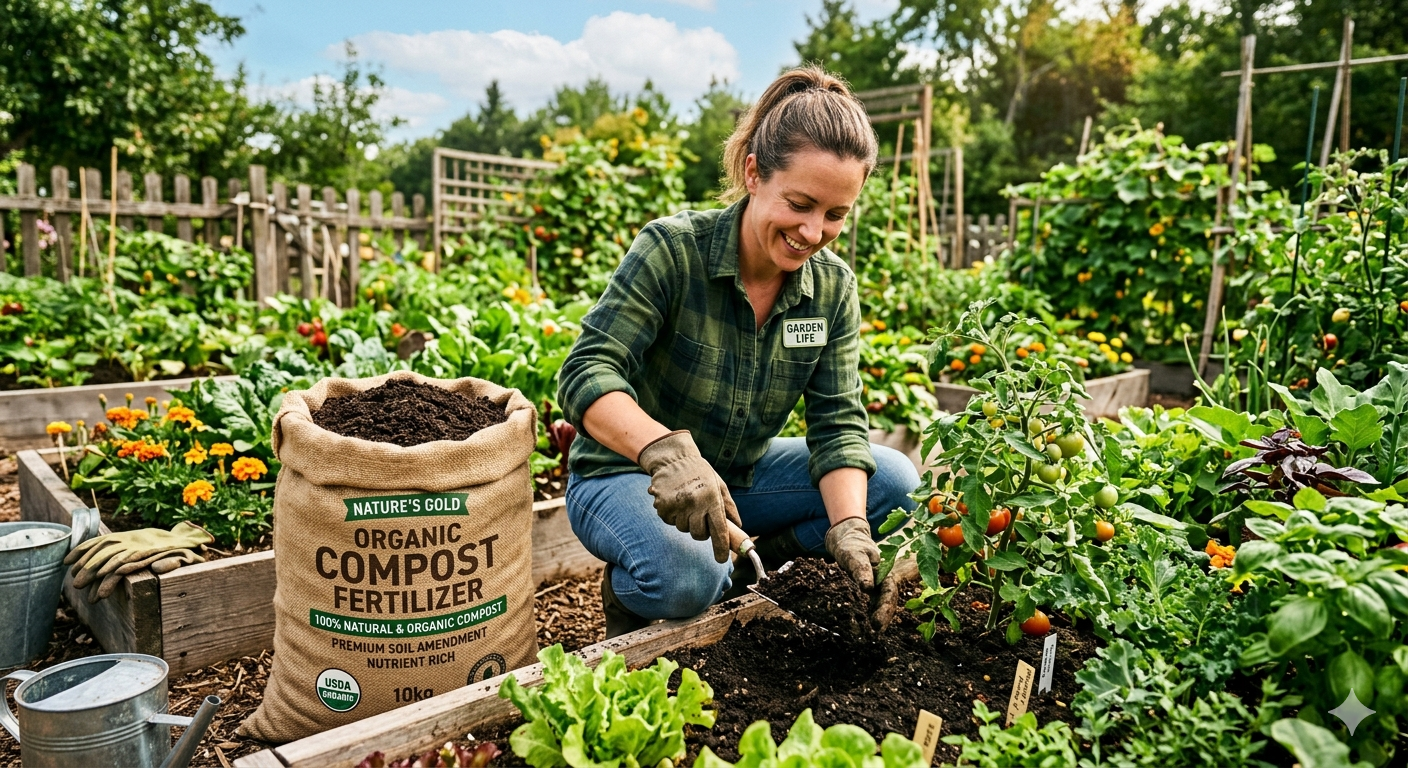
Step 1: Collect Materials
Gather kitchen waste, leaves, straw, and cow dung.
Step 2: Create Layers
Arrange dry and wet materials in layers.
Step 3: Add Soil & Water
Add a little soil and keep it moist.
Step 4: Turn the Pile
Turn it every 5–7 days to allow air circulation.
Step 5: Ready
After 3–6 weeks, dark and odorless compost will be ready.